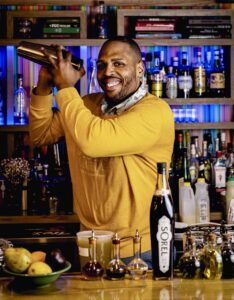
Bartender and columnist Khalid Williams. Photo by Bread and Beast Photography, provided by Khalid Williams.
By Khalid Williams
The best bars are selling something far more memorable than cocktails.
Not long ago, I watched two guests order the exact same Old Fashioned. The first guest took a sip, nodded politely, settled the check, and headed home. The second spent nearly 20 minutes talking with the bartender about bourbon, oak barrels, bitters, and why one orange peel smelled different from another. Before leaving, that guest asked where to buy the bourbon, made a reservation to come back with friends the following weekend, and thanked the bartender for “teaching me something tonight.”
The drinks were identical. The experience wasn’t.
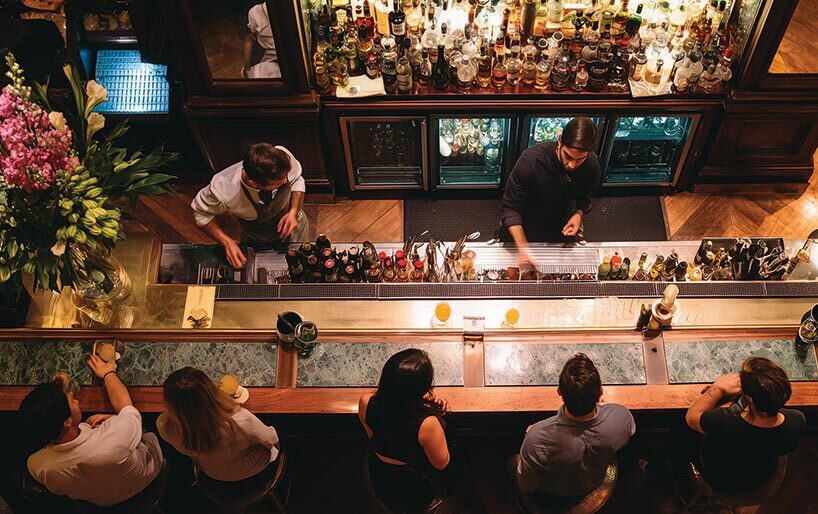
Moments like that have convinced me that the most valuable thing behind a bar isn’t always the rarest whiskey or the newest cocktail on the menu. More often, it’s the conversation that surrounds the glass. As bartenders, we spend countless hours perfecting recipes, dialing in dilution, and debating which vermouth belongs in a Manhattan. Those details matter because craftsmanship matters. But when guests tell stories about a memorable night out, they rarely begin with measurements. They begin with people.
That’s an important distinction in today’s hospitality landscape. Guests have never had more opportunities to make excellent drinks at home. A quick search online can teach someone how to stir a Negroni or shake a Daiquiri, and retail shelves are filled with premium spirits that were once difficult to find. If a cocktail were nothing more than liquid in a glass, we’d be competing with YouTube videos and home bar carts.
Fortunately, that’s never been the real business we’re in. We’re in the business of creating memories.
One of my favorite parts of tending bar has always been watching curiosity spread across someone’s face. It usually starts with a simple question. “Why does this bourbon taste sweeter than that one?” “Why is this rum grassy?” “What exactly is amaro?” Those questions are invitations. They give us permission to move beyond taking orders and begin sharing knowledge. A 30-second conversation about barrel char or fresh sugarcane can transform an ordinary drink into something personal, because guests aren’t simply consuming a product anymore. They’re discovering it alongside someone who genuinely enjoys helping them understand it.
That doesn’t mean every cocktail needs a five-minute lecture. In fact, the best stories are often the shortest. A guest ordering a Martini probably doesn’t need the complete history of vermouth production, but they might enjoy hearing why the lemon oils on the surface brighten the first sip. Someone trying rye whiskey for the first time may appreciate learning that its spice comes from the grain itself rather than added flavoring. Small observations like these don’t interrupt service. They enrich it.
 I’ve also found that guests connect most deeply with stories that feel close to home. Here in Connecticut, we’re fortunate to have beautiful orchards, talented distillers, hardworking farmers, and a growing community of producers creating ingredients worth celebrating. When a cocktail incorporates local maple syrup, fresh cider, honey from a nearby apiary, or spirits distilled just a few towns away, that isn’t marketing. It’s an opportunity to remind people that hospitality can reflect the place where we live.
One cocktail that has become a favorite of mine and embraces that philosophy is my Connecticut Orchard Old Fashioned: 2 ounces of Connecticut bourbon, 1/4 ounce of reduced fresh apple cider, 1 barspoon of local maple syrup, 2 dashes of aromatic bitters, 1 dash of orange bitters, and an orange peel and apple slice for garnish. To make it: Combine the bourbon, cider reduction, maple syrup, and bitters in a mixing glass filled with ice. Stir until properly chilled and diluted before straining over a large ice cube in a double Old Fashioned glass. Express an orange peel across the surface of the drink, run it around the rim, and garnish with the apple slice.
I enjoy serving this cocktail because it gives me something to talk about beyond the bourbon itself. The concentrated cider brings the flavors of autumn into the glass without making the drink taste sugary, while the maple syrup quietly supports the vanilla and baking spice already present from the barrel. It’s familiar enough that almost anyone who enjoys an Old Fashioned feels comfortable ordering it, yet distinctive enough to spark a conversation about Connecticut’s agricultural traditions and seasonal ingredients. By the time the guest finishes the drink, they often remember the story as clearly as they remember the flavor.
As our industry continues to evolve, I believe that’s where the greatest opportunity lies. We don’t need increasingly complicated recipes to stand apart. We need bartenders who understand that hospitality isn’t measured solely by technical ability, but by generosity with knowledge, genuine curiosity, and the willingness to make every guest feel like they’re part of the experience rather than simply watching it unfold.
The cocktails we serve may last twenty minutes. The stories we tell around them often last much longer. And in a profession built on bringing people together, those stories may be the most valuable thing we ever pour. Look for more on this topic next month.
Khalid Williams is a Connecticut-based bartender, beverage director and writer behind “The Barrel Age.” A winner of numerous accolades, he’s worked across the three-tier system. His mission is to speak the truth about drinks, culture and community with sharp, soulful hospitality for modern drinkers. Follow his weekly drinks content at drinkthebarrelage.com. Photo by Bread and Beast Photography, provided by Khalid Williams.