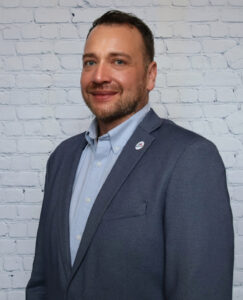
Ryan Robinson, Director of Education, Brescome Barton and Worldwide Wines.
Why Beverage Certifications Pay Off
By Ryan Robinson, Advanced Sommelier-CMS, WSET Diploma and WSET Educator
When it comes to the beverage industry, knowledge isn’t just power, it’s an investment in yourself, your staff and your business. Every pour, every bottle recommendation, every conversation with a guest is an opportunity to make or lose a sale. This is why I am a strong advocate of beverage certification through education. In a time where alcohol sales have been trending downward and with the current difficulty in finding and retaining an experienced workforce, investing in education has a direct payoff that shows up in sales, service and staff retention. This commitment pays dividends in the future!
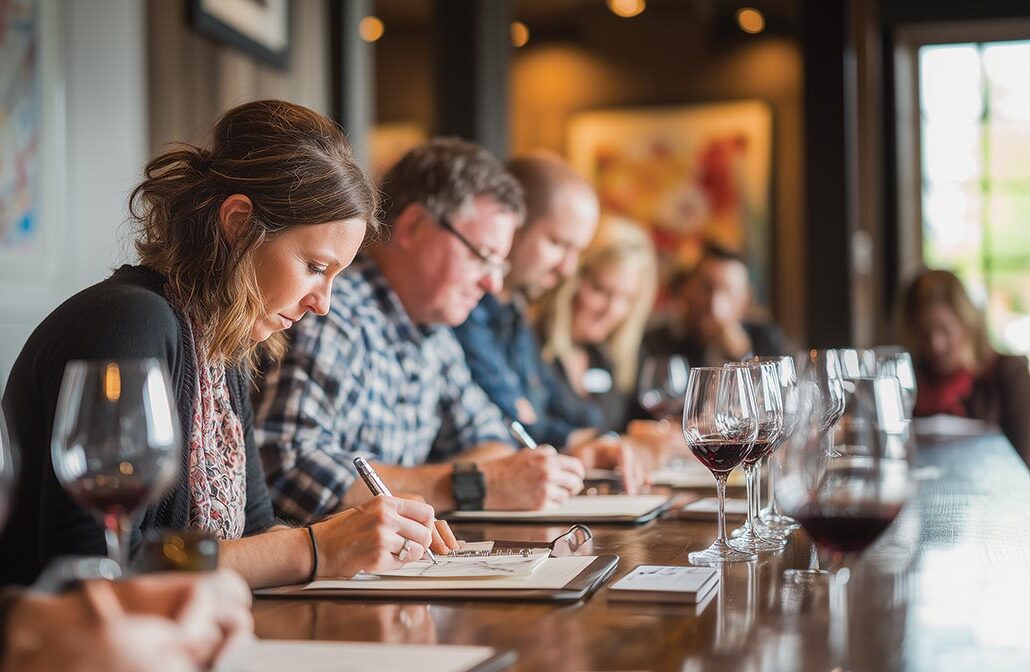
For those working in the industry, a certification can feel like climbing a mountain. All too often I hear individuals say, “I already have the knowledge, why do I need a piece of paper to validate my expertise?” A lot of work goes into completing higher levels of accreditation in the beverage industry. The exams are tough, the flash cards endless and the cost can range from a few hundred dollars to thousands. But the view from the top is worth it. Certifications like WSET, Court of Master Sommeliers, Wine Scholar Guild or the Society of Wine Educators aren’t just framed certificates. They signal to employers and customers alike that you are the expert and with that comes trust from the consumer.
From a practical standpoint, having that credential on your résumé often means access to better-paying jobs, more responsibility if that’s the path you’re looking for and faster advancement. A sommelier with certification is far more likely to be trusted with managing a beverage program. A retailer with a wine diploma under their belt is better equipped to build selections that move product rather than it sitting on shelves. More importantly, these achievements also build confidence. It’s one thing to suggest a bottle because you “think” it might work, it’s quite another to explain producer history, tannin structure or regional distinctiveness with authority. Customers recognize the difference—and they buy with trust. With trust comes repeat business.
There is also the intangible benefit of pride. Passing one of these exams is not easy. When you’ve earned it, you carry that sense of accomplishment into every shift, and that energy is contagious with both co-workers and guests.
Off the top, educated staff sell more! It’s not magic, it’s reality. When a server confidently recommends a $50 bottle over a $35 one, guests follow their lead. When a retailer can explain why a certain mezcal is worth trying, the customer is more likely to buy. Knowledge creates trust, and trust turns into higher sales and a greater chance for developing customer loyalty.
Second, education reduces turnover. Staff who feel supported and invested in are far more likely to stay. The beverage industry recently is witnessing a higher-than-normal turnover … every departure costs time, training and money. Giving employees access to certifications shows them they’re valued. It tells them you believe in their future. That kind of loyalty can’t be bought with just a paycheck.
Third, there’s the competitive edge. Restaurants and stores in Connecticut and Rhode Island face stiff competition, and guests have more choices than ever. When your team knows how to talk about skin-contact whites from Slovenia or the latest craft gin trend, they create excitement while making your business stand out. You become a destination for curious drinkers looking for something beyond the obvious.

Here’s the thing many owners and managers miss: Investing in your team’s education pays for itself. Training staff through certifications or structured courses might look like an expense on paper, but in reality, it’s an investment with a return. There are ways to help mitigate the cost of beverage training. Talk to your sales reps and ask what, if any, training they are able to provide. With the growth of wine and spirits distributors on the rise, many are trying to stand out from their crowded competition. Some employ a full education team or department. Leverage those distributors to assist in training your staff while the cost to you is minimal.
When businesses put people first by investing in them through training and education, the results ripple outward. Sales go up, guests notice the difference and staff stick around because they see you investing in their future. The bottom line? Invest in education. It pays off in every glass poured. The end result: people first, profits follow.
Higher beverage certification can be daunting. They take time, money and personal commitment. Pushing yourself to become a better version of yourself tomorrow than you are today can be challenging. Those that have undergone these challenges know that personal growth is ripe with fear of failure. I can tell you firsthand, failure happens a lot! The higher-level exams such as the WSET Diploma, Advanced and Master Sommelier or the Masters of Wine have a very low pass rate. Persistence pays off. I have learned more in my failures than I’ve learned from success.
This year only one person passed the Master Sommelier Diploma from the Court of Master Sommeliers-Americas, David Reuss. I have the good fortune to call him my friend, study partner and teammate on the USA Wine Team. David’s story, like the very few before him, is a lesson in commitment and embracing failure. “The exam is a fundamental exercise in how you respond to failure,” he said.
Originally from Montana and now residing in Denver as an Educator for Jackson Family Wines, David failed his first attempt at passing the Certified Sommelier exam. Upon returning to work, his employer Bobby Stuckey MS, at Frasca in Boulder, Colorado, pulled him aside and said, “you’re going to work hard and become a Master Sommelier someday.” Ten years later, David did just that!
His path to becoming one of the very few Master Sommeliers was met with plenty of challenge. After passing the Certified Sommelier exam in 2015, David set out to achieve the next challenge, passing the Advanced Sommelier title, which he did in 2019. From there, his sights were set on getting an invitation to the Master Sommelier exam. There are three portions to achieving this title, passing Theory, Service and Tasting. David first passed Theory in 2021 and went on to sit for both Service and Tasting. With the Court of Master Sommelier, a candidate successful in Theory has three consecutive yearly attempts to pass both Service and Tasting. If a candidate is unsuccessful in those three attempts, they must re-sit, which means starting over with passing Theory once again. David did not achieve the Master Sommelier title in three attempts and had to re-sit and start from the beginning, by passing Theory. In 2024, he passed Theory for the second time and went on to pass Service, but failed at passing Tasting. This year, he only had to pass Tasting—and he did! He was one of three people who passed Tasting this year and was the only candidate who successfully passed all three portions of the Master Sommelier exam this year, making him the world’s newest Master Sommelier.
Ryan Robinson is the Director of Education for Brescome-Barton Inc., and Worldwide Wines in Connecticut, an Adjunct Professor at the University of New Haven, and is the Principal at SommCentric, a beverage education and consulting agency. He is a member on the USA Wine Tasting Team, representing the United States and the World Wine Tasting Championships and holds the credentials of Advanced Sommelier-CMS; WSET Diploma and WSET Educator in Wine, Sake and Beer; Rioja Wine Educator; VIA Italian Wine Ambassador; Wine Scholar Guild Educator and Italian and Spanish Wine Specialist; and Certified Scotch Whisky.