A look at where sales happened and where trends may be heading
From Staff Reports
U.S. consumer spending on beverage alcohol is shifting heavily toward on-premise venues, leaving traditional off-premise retail channels in a sharp late-summer slump. According to recent data from NielsenIQ market reports, total off-premise alcohol dollar sales fell 3.4% to $8.5 billion for the four weeks ending August 15, 2026, as case volumes plummeted 5.3%. Store-bought wine and spirits revenues decreased by up to 6.7% over the same period, with convenience and grocery stores experiencing the steepest contractions.
Even within this retail squeeze, consumer behavior is splitting into a clear K-shaped pattern. Institutional analysts at Evercore ISI emphasize that this “reset period” is heavily rewarding selective value plays and agile brands with deep consumer intelligence, while legacy players face a steeper uphill climb. For instance, despite broader off-premise contractions, NielsenIQ’s Total Alcohol Pulse reveals that spirits-based ready-to-drink (RTD) cocktails remain a major bright spot, climbing 14% in value and 15% in volume through late August.
This K-shaped divergence is creating an environment where middle-tier brands are squeezed out, while premium offerings and extreme value plays thrive. On the upper arm of the K-shape, recent digital commerce tracking from platforms like MikMak and online SaaS e-commerce infrastructure reports reveal that high-net-worth consumers are driving a 9.2% increase in average order value for rare finishes and additive-free certifications, treating high-end spirits as personal rewards. Conversely, the lower arm is defined by strict budget consciousness, driving a spike in bulk private-label retail purchases. To capture these multi-tiered shoppers, agile brands are abandoning one-size-fits-all positioning. Winning strategies may rely on using consumer intelligence to deploy hyper-localized activations.
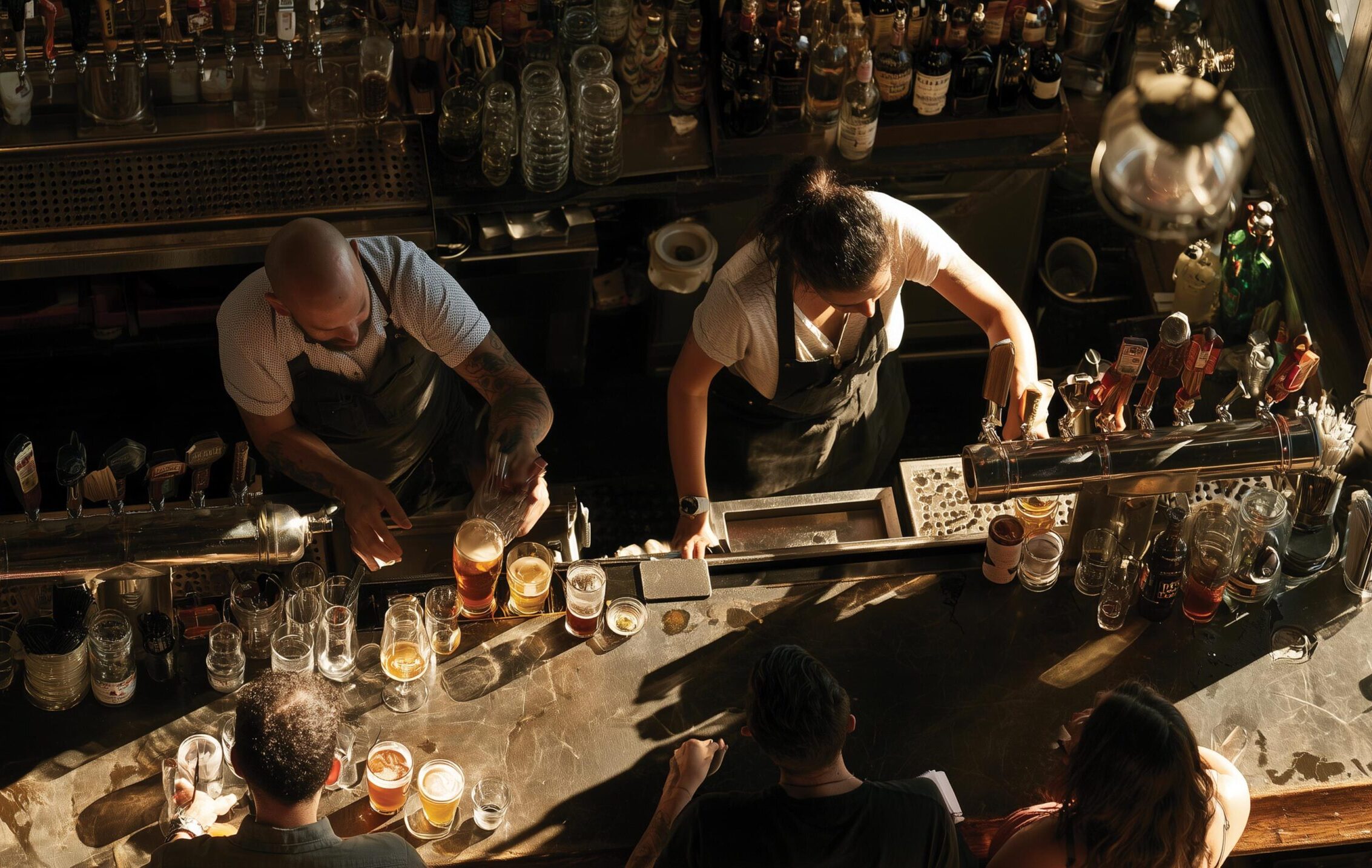
In contrast, data released by the National Beer Wholesalers Association (NBWA) reveals that bars, restaurants, and experiential venues are capturing the majority of consumer engagement. Wholesale purchases by on-premise retailers climbed 12% year-over-year. Driving this shift is a strong focus on draft beer sales, which accounted for 55% of the total on-premise package share. NielsenIQ’s 2026 Draft Beer Report attributes this to consumers actively seeking out premium flavor and perceived experiential value out of home—noting that draft beer drinkers spend an average of $45 more per month in outlets than packaged product buyers.
Industry analysts report that 80% of all new beer-selling accounts opened this year are located in on-premise spaces. This surge in out-of-home drinking has been bolstered by a historic summer of sports. The 2026 FIFA World Cup generated an estimated 2 million incremental on-premise cases for the hospitality sector, a cyclical tailwind that Goldman Sachs equities analysts anticipated would fuel a major structural “comeback year” for large scale brewers like Constellation Brands and Molson Coors.
Early booking data from hospitality networks like Toast and event-management systems like Naboo indicates that corporate holiday event reservations for the fourth quarter are up 14% compared to last year. This trend is shifting social celebrations into dedicated hospitality venues, placing the financial burden of inventory strategy onto on-premise beverage directors.
Looking ahead to the final quarter of the year, analytical indicators point to a slow easing of these systemic headwinds. Data from the Wine & Spirits Wholesalers of America SipSource forecast predicts the total core spirits market will remain in negative growth territory but will show modest stabilization, improving from a rolling 12-month contraction of -4.19% earlier this year to -3.91% by the fourth quarter.
While Goldman Sachs’ Beverage Bytes merchant data signals that brick-and-mortar retail traffic may stay muted through the winter, the long-term runway remains intact. Evercore ISI’s sector projections point out that the U.S. market is still on track to capture over $7.5 billion in incremental value through 2028.
Economists project that the gap between resilient, experience-led on-premise venues and sluggish retail store shelves will persist through the holiday season as consumers continue prioritizing selective social events and affordable luxuries over stocking up at retail. ■