Ryan Robinson, Director of Education, Brescome Barton and Worldwide Wines.
Part 1 of 2: Why Wine Tourism Has Become Serious Wine Education
By Ryan Robinson, Advanced Sommelier-CMS, WSET Diploma and WSET Educator
Every year, many plan some version of the same family vacation. We book a cruise, return to the same beach, or spend a week moving between a resort pool and a buffet. Rest has a value. But for wine buyers, distributors, suppliers, and students, I would suggest replacing one traditional vacation every few years with something restorative and educational. Go spend a week in a wine region.
Wine tourism is no longer a small afterthought built around a quick cellar tour and a souvenir glass. The Global Wine Tourism Report 2025 gathered responses from 1,310 wineries in 47 countries. Roughly two-thirds described wine tourism as profitable, and tourism-related activity accounted for about one-quarter of winery revenue on average. Those figures explain why producers are investing in tasting rooms, restaurants, lodging, and vineyard experiences.
Rioja offers a clear example of that growth. The region recorded 1,164,388 winery visits in 2025, up from 880,000 in 2023, an increase of roughly 32 percent in two years. The economic impact reached $244.73 million, and Rioja wineries doubled their annual investment in wine tourism to $7.76 million. Today there are 226 wineries in the appellation open to visitors, offering experiences that include vineyard walks, food programs, sports, architecture, and cultural events.

Limestone at Argillae in Orvieto.
The real value of wine travel is what happens when a place you have studied for years suddenly becomes reality. During my visit to Garesio in Barolo, I was reminded of how quickly that can happen. I have taught Nebbiolo, discussed the communes of Barolo, and explained elevation, exposure, soils, and MGAs to students. Standing in the region changed the way I understood the wine. Garesio works with the MGA’s Cerretta and Gianetto in Serralunga d’Alba.
On paper, we can describe the soils through marl, limestone, sand, fossils, and active calcium carbonate. In person, those details stop feeling like exam material. The slopes become real, the distances between vineyards make sense, and the relationship between exposure and ripening is no longer a diagram.
Travel gives the studying somewhere to live. Once you have walked a steep vineyard, elevation is no longer a number. Once you have felt the afternoon sun on one slope while the neighboring parcel falls into shadow, exposure becomes easier to understand. Once you have met the people responsible for farming those sites, a producer name stops being a line on a sales sheet.
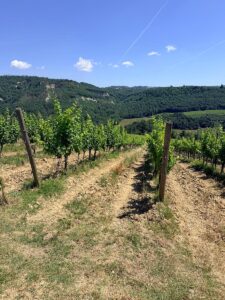
Soil series in Serrulunga d’Alba at Garesio.
I felt the same awakening during my visit to Argillae near Orvieto. Argillae’s name comes from the Latin word for clay, and the estate’s vineyards are shaped by clay, sand, limestone, rock, and fossils from the Pliocene period. The vineyards sit between roughly 150 and 300 meters, with the landscape and soils helping define the freshness and character of the wines. Standing among those hills, seeing the pale soils and ancient seashell fossils, gives it context that is difficult to forget.
Wine travel also introduces you to the people who rarely fit neatly into a textbook. You learn what a challenging vintage actually meant for the people who lived through it. These firsthand experiences resonate and allow you to better understand that the bottle on a shelf represents years of farming, financial risk and decisions. For buyers and students, that human context changes everything. You return home better prepared to explain not only what a wine tastes like, but why it matters.
This does not mean every family vacation has to become a week of barrel samples and vineyard lectures. Wine regions are usually surrounded by the things families already travel for, including food, history, architecture, hiking, villages, and scenery. A morning winery appointment can sit beside an afternoon exploring a town.
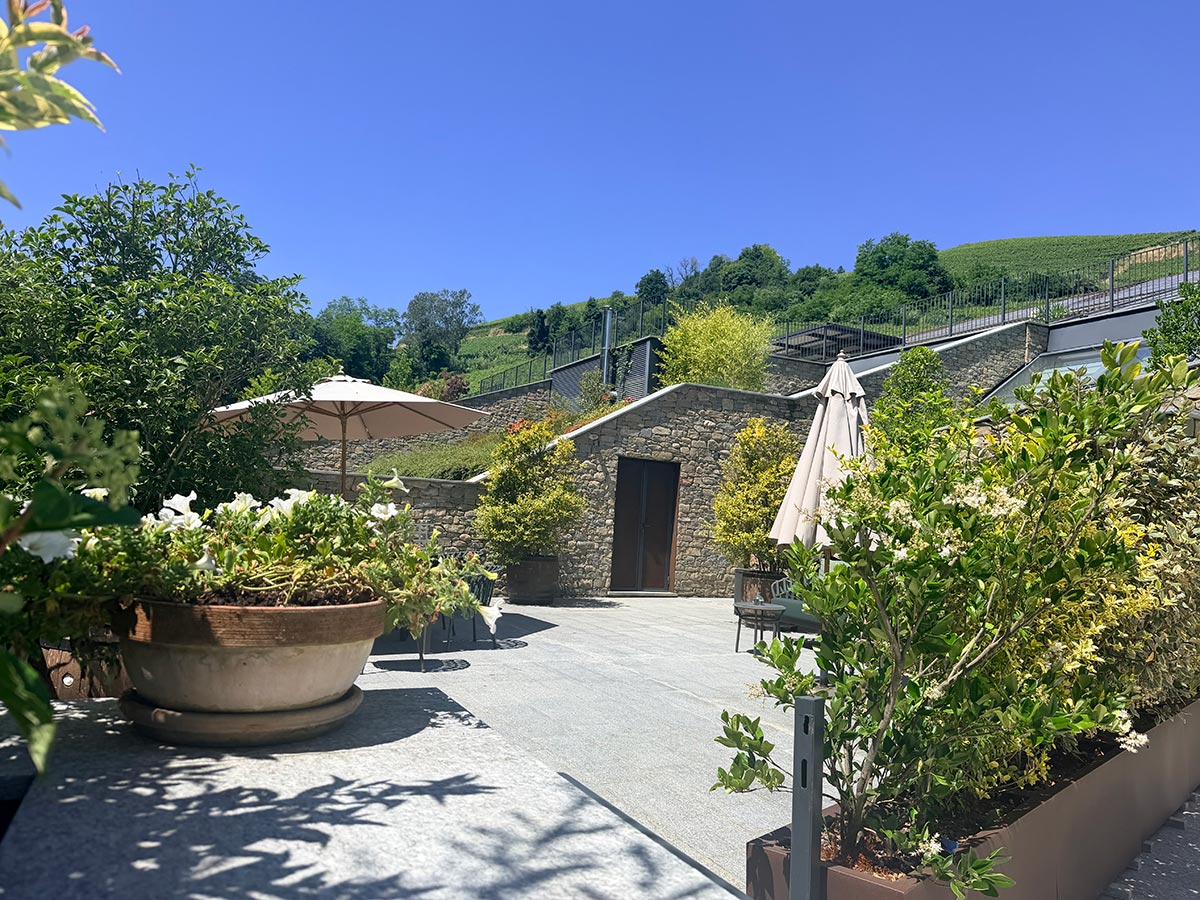
Garesio Wine Resort. Photos by Ryan Robinson.
The next time you plan another familiar trip, consider trading one beach week for Barolo, Rioja, Orvieto, Champagne, the Mosel, or even a New England wine region closer to home. You may return with a few bottles, but the real souvenir will be perspective. For anyone who buys, sells, or studies wine, that perspective is one of the most valuable forms of continuing education we have.
Read the second part of this article in the September issue.
Ryan Robinson is the Director of Education for Brescome Barton and Worldwide Wines in Connecticut. He is also the Wine Director for Cornerstone Restaurant Group in North America and South Korea, and an Adjunct Professor at the University of New Haven. He holds the credentials of Advanced Sommelier-CMS; WSET Diploma and WSET Educator in Wine, Sake and Beer; Rioja Wine Educator; Wine Scholar Guild Educator and Spanish Wine Specialist; and Certified Scotch Whisky Professional from the Council of Whiskey Masters.