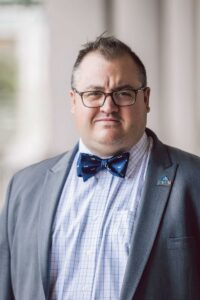
Nick Fede Jr., Executive Director, Rhode Island Liquor Operators Collaborative.
By Nick Fede Jr., Executive Director, Rhode Island Liquor Operators Collaborative
Rhode Island is heading into one of the most consequential election cycles I can remember. The Nov. 3 election will not simply determine who occupies a few offices at the State House. We are looking at a significant transition in leadership, a new governor, continued turnover in the General Assembly, and a legislature that is already operating under relatively new leadership. For businesses across Rhode Island, including our independent liquor stores and family-owned retailers, this matters.
The biggest story, of course, is the governor’s race. Helena Buonanno Foulkes enters the general election as the Democratic nominee after defeating incumbent Gov. Dan McKee in the September primary. That alone represents a remarkable political development. McKee became governor after Gina Raimondo left office and subsequently won a full term, but Foulkes’ victory means Rhode Island will have a new governor regardless of what happens in November. She now faces Republican Aaron Guckian and Independent Ken Block.
For those of us in the business community, a potential Foulkes administration deserves close attention. Foulkes comes from a corporate background, most notably as a former CVS executive, and has presented herself as someone who can bring a different approach to state government. Her victory over an incumbent governor also demonstrates that Rhode Island voters are willing to demand change when they believe the status quo is not delivering.
That doesn’t mean the challenges facing the next governor will be easy. The next administration will inherit all of these issues, and the decisions made during its first few years will have real consequences for employers and small businesses.
The General Assembly is also experiencing substantial turnover. All 113 legislative seats are on the ballot every two years. While Rhode Island remains overwhelmingly Democratic, there are numerous open seats and a significant number of lawmakers who will not be returning. Nine House members, for example, had announced they would not seek reelection by the filing deadline.
That means a large incoming freshman class in the House of Representatives. A new class of legislators can be a very good thing. Freshmen bring different professional experiences, different perspectives and, hopefully, new ideas. But there is also a learning curve. Understanding how Rhode Island government works, how legislation affects businesses and consumers, and why certain policies have unintended consequences takes time.
That is one reason it will be especially important for organizations like the Rhode Island Liquor Operators Collaborative to remain engaged. We need to make sure new legislators understand the three-tier system, the role of independent retailers, the economic contribution of our industry and the practical impact that legislation can have on small businesses. Pay attention on election day and be sure to get to know your legislators.
 We are also entering this period with new leadership at the State House. Valarie Lawson became Senate president in April 2025 following the death of former Senate President Dominick Ruggerio. She brought extensive experience in the Senate, having previously served as majority leader and majority whip.
Then, this past May, Christopher Blazejewski was elected speaker of the House, succeeding K. Joseph Shekarchi. Blazejewski previously served as House majority leader and received the support of 65 House members in his election as speaker.
So, when you step back, Rhode Island is looking at a remarkable amount of institutional change: a new governor, a new attorney general, a new House speaker, a relatively new Senate president and a House that will include a substantial number of new members.
For the business community, this is not the time to sit on the sidelines.
The 2027 legislative session will be shaped by people who are being elected right now. The relationships we build with new legislators, and the education we provide about our industries, will be critical. We should welcome new voices while making sure those voices understand the consequences of the policies they are being asked to support. Change is coming to Rhode Island government.
For Rhode Island’s independent liquor retailers, one thing is certain: We will be there, ready to work with the next generation of leaders and advocate for policies that allow small businesses to compete, grow and continue serving their communities. Contact riliquoroperatorscollaborative@gmail.com to get involved.
Nick Fede Jr. serves as RILOC’s executive director and the American Beverage Licensees president, and is a third-generation liquor retailer.